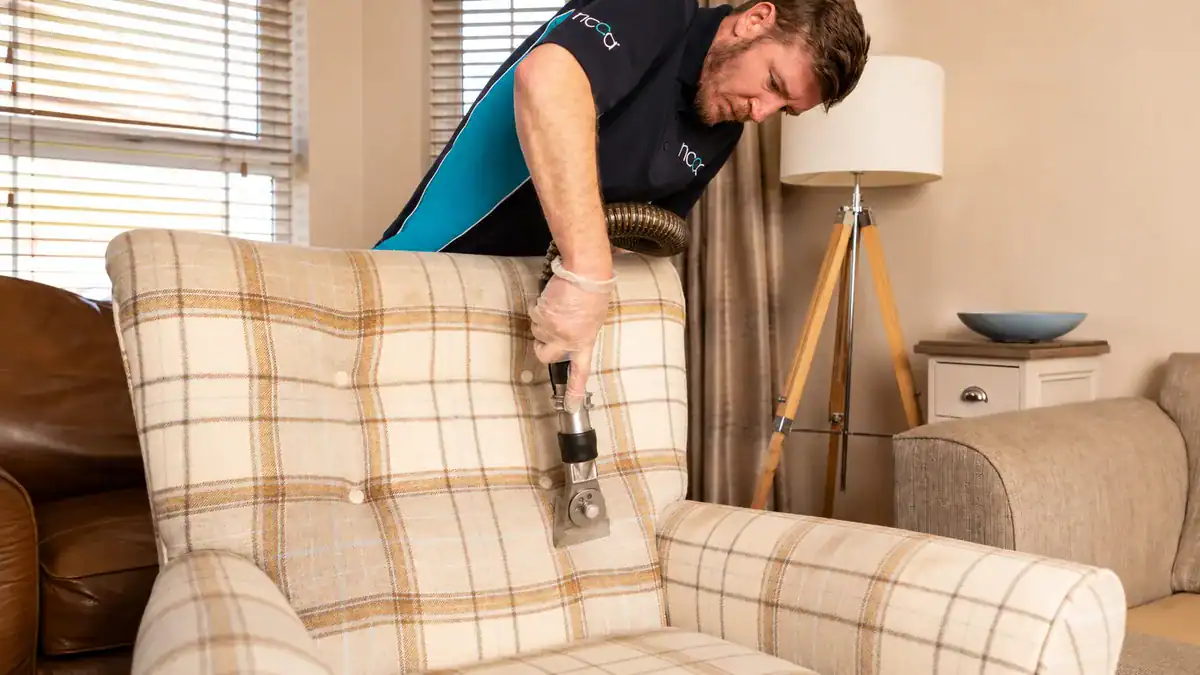
Aqua-Dry uses hot water extraction for suitable fabric upholstery and has low-moisture hand tools to help control the amount of moisture used during cleaning. Leather furniture requires a different process from fabric upholstery.
Professional sofa cleaning should begin with an inspection. In this guide, we explain how upholstery fabrics and care labels affect cleaning and why the experience of the technician is so important.
Many upholstery fabrics can be professionally cleaned when they are assessed and treated by a properly trained technician. However, not every sofa is suitable for hot water extraction.
A sofa is made up of more than the visible surface fabric. The dye, backing material, filling, trims and construction can all affect how it responds to moisture and cleaning products.
Before cleaning begins, the technician needs to consider:
This assessment helps establish whether the furniture is suitable for the cleaning service and what result can reasonably be expected. If it is unsuitable, the technician will explain the concerns before proceeding.
Sofas are manufactured using many different natural, synthetic and blended fabrics. These materials do not all react to water, heat, cleaning solutions and agitation in the same way.
Synthetic materials such as polyester, acrylic and nylon are commonly used because they can be hard-wearing and practical. Many synthetic fabrics respond very well to professional cleaning, although their colours and construction should still be checked first.
Natural fibres such as cotton, linen and wool can also be cleaned successfully, but they may require more careful control of moisture and drying. Incorrect treatment can potentially lead to shrinkage, colour movement, distortion or water marks.
Blended materials can be more difficult to identify because the fabric may contain a combination of natural and synthetic fibres. The way the material is woven and backed can also influence its suitability for cleaning.
Velvet is a good example of why the appearance of a fabric alone does not provide enough information. Velvet describes the construction and finish of the material rather than one particular fibre.
A velvet sofa could be made using cotton, synthetic fibres or a combination of materials. These fabrics may respond differently to cleaning.
The pile gives velvet its distinctive texture and appearance, but it can also be affected by excessive moisture, heat or agitation. An experienced upholstery cleaner will assess the fabric and carry out appropriate tests before deciding whether cleaning can proceed.
This does not mean that velvet cannot be professionally cleaned. It means that suitability must be assessed carefully rather than assuming that all velvet furniture will behave in the same way.
Upholstery care labels are normally attached beneath the sofa or underneath the seat cushions. They may provide information about the fabric composition and the manufacturer’s recommended cleaning method.
Some labels use letters to indicate how the material should be maintained:
Always read the manufacturer’s full instructions. A cleaning code does not, on its own, confirm that the whole sofa is suitable for hot water extraction or that its cushion covers can be machine washed.
The sofa’s filling, backing, trims and current condition also need to be considered. Labels can be missing, faded or unclear, particularly on older furniture.
A “dry clean only” label is an important instruction from the manufacturer. It should not be ignored or treated as permission to try wet cleaning at home.
Tell the Aqua-Dry team about the label when enquiring and provide a photograph of the full instructions if possible. The technician will need to consider the manufacturer’s guidance alongside the fabric, construction and condition of the furniture.
Aqua-Dry uses hot water extraction for suitable fabric upholstery. If the care instructions or assessment indicate that the sofa is unsuitable for this treatment, cleaning should not proceed on the assumption that using less water will make it safe.
Our guide to dry-clean-only upholstery and professional cleaning explains why care instructions and a professional assessment both matter.
A missing care label does not automatically mean that the sofa cannot be cleaned. Many older sofas no longer have a readable label, while others may never have had one in an accessible position.
In these cases, the technician will assess the appearance, feel and construction of the fabric. Tests may then be performed in a small and discreet area before the full clean begins.
Professional testing can help assess:
Testing helps reduce risk, but it cannot guarantee how every part of the furniture will respond. If there is uncertainty about suitability, the technician should explain the concerns before proceeding.
Even when two sofas appear similar, they may react differently to cleaning. One could be made from a durable synthetic material, while the other contains natural fibres, unstable dyes or a sensitive backing.
Assessment and testing before cleaning help reduce the risk of problems such as colour bleeding, shrinkage, browning, pile distortion or slow drying.
The amount of moisture used also matters. Aqua-Dry uses hot water extraction for suitable upholstery, with low-moisture hand tools available to help control moisture during the cleaning process. These tools do not make every fabric suitable for water-based cleaning.
Our technicians assess each piece of furniture before deciding whether cleaning can proceed and how the treatment should be carried out. You can find out more about our professional upholstery cleaning service in Dublin.
Professional cleaning can remove many common stains and make a substantial difference to the overall appearance of a sofa. However, no responsible upholstery cleaner should promise that every mark will disappear completely.
The result will depend on what caused the stain, how long it has been present and whether any household products have already been applied.
Some substances alter the original colour of the fabric rather than simply sitting on its surface. In these cases, cleaning may remove the contaminant without reversing permanent bleaching or discolouration.
Rubbing a stain or repeatedly applying different household products can also make it more difficult to treat. If possible, tell the technician what caused the mark and which products have already been used.
Leather sofas can be professionally cleaned, but they require specialist products and methods. Standard fabric upholstery treatments should not be used on leather furniture.
The technician needs to identify the type and condition of the leather before selecting a suitable treatment. Incorrect products can damage the finish or cause unwanted changes to the surface.
Aqua-Dry provides a dedicated leather upholstery cleaning service for sofas, chairs and other leather furniture throughout Dublin.
If the fabric is suitable, a professional stain protector can be applied after the sofa has been cleaned.
Stain protection does not make upholstery completely stain-proof. It can help resist certain spills and provide more time to blot them up, but prompt action is still necessary and permanent staining remains possible.
This can be especially useful for frequently used sofas, lighter-coloured upholstery and homes with children or pets. Read more about Aqua-Dry’s stain protector treatment for sofas and carpets.
The best way to establish whether your sofa is suitable for cleaning is to have it assessed by an experienced upholstery cleaner.
Aqua-Dry has provided professional sofa, couch and upholstery cleaning throughout Dublin for over 40 years. Our technicians inspect the fabric and condition of each item before deciding whether it is suitable for hot water extraction.
If you are unsure about your sofa’s fabric or care label, you can send photographs when requesting a quotation. These can help with an initial enquiry, but photographs alone cannot conclusively identify the fabric or confirm that it is safe to clean. An assessment is still needed before cleaning begins.
Request a free upholstery cleaning quote or call Hannah and the team on 01-840 0799.


