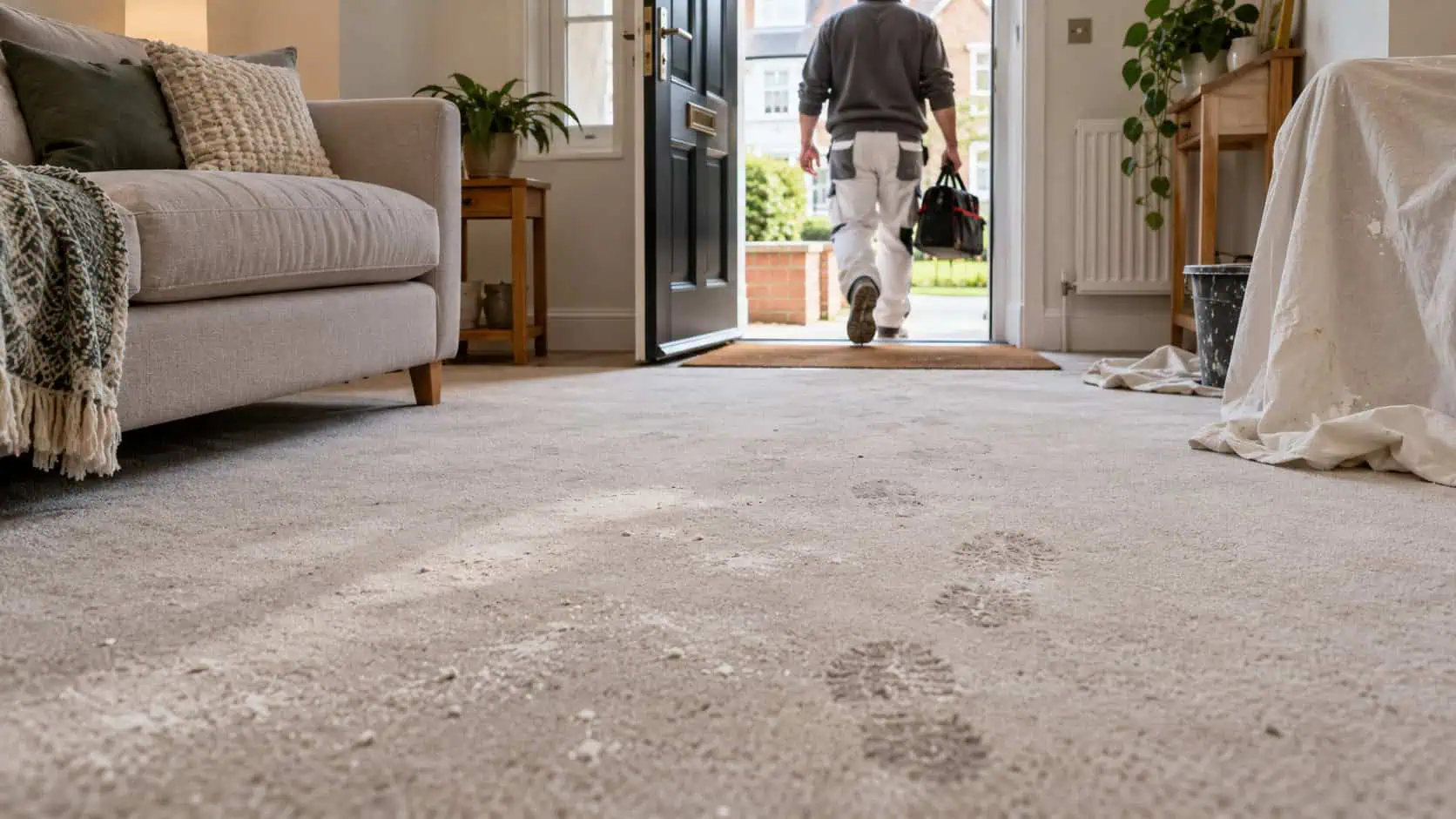
Renovation work can leave more behind than you expect. Fine dust from sanding, plastering or drilling can settle across a room and work its way into carpet pile. There may also be marks from foot traffic, furniture being moved or materials brought through the house.
It can be tempting to clean the carpets before the rest of the house is finished. In most cases, though, it is better to wait until the dusty work is complete. Here’s what to consider when planning carpet cleaning after a renovation, and when it makes sense to ask a professional for advice.
Even when tradespeople take care, dust can travel beyond the immediate work area. It can settle on carpets in nearby rooms, collect along edges and skirting boards, or be carried through the house on shoes. Protective coverings help, but dust can still get underneath or around the edges if they move during the work.
Carpet pile can also trap small particles below the surface. That means a carpet may look slightly dull or feel gritty underfoot even after the larger debris has been removed. Walking over the area can press particles further into the pile, while moving tools or materials across it can leave marks or localised soiling.
Different renovation materials need different treatment. General dust, plaster, cement, paint, filler and adhesive are not all the same, so it is best to identify what has reached the carpet before trying to clean it. If you are unsure what a mark is, avoid rubbing it or applying a product that may make it harder to treat.
It is usually best to wait until the dusty work has finished. If sanding, cutting, plastering or drilling is still happening, dust can settle on the carpet again after it has been cleaned. Waiting until the final trades have left helps you get more from the clean and avoids repeating the work.
Allow any paint, filler or other wet materials to dry fully before arranging a carpet clean. If there are spots of paint, plaster or adhesive on the carpet, mention them when you make an enquiry. A technician can then ask the right questions and advise whether the mark needs separate attention.
If you have protected the carpet during the renovation, remove the covering carefully once the work around it is finished. Dust can collect on top of the sheeting, so rolling or folding it inwards can help prevent that dust from falling back onto the carpet.
A little preparation can make the appointment easier and help the technician understand what the carpet needs. Before booking, think about what work was carried out and where the dust or marks are. You do not need to diagnose the problem yourself, but a few details can help Aqua-Dry give you useful advice.
If there is a pile of fine powder or an unknown building material on the carpet, avoid brushing it deeper into the fibres or adding water to it. Contact Aqua-Dry for advice first. Some residues can be more difficult to treat if they are spread or worked into the carpet.
Professional carpet cleaning can help remove soil and dust that have settled into the carpet pile. The technician will first assess the carpet and the type of soiling. This matters because the fibre, carpet condition and any materials present can affect which cleaning method is suitable.
For carpets that are suitable, Aqua-Dry uses professional hot water extraction to clean the fibres and extract loosened soil. The process uses specialist equipment to rinse and recover moisture from the carpet. It is different from simply wiping the surface, though the right approach will depend on the carpet and what has landed on it.
Carpet cleaning is not the same as a full builders’ clean. It will not remove dust from shelves, walls, windows or other surfaces, and paint or adhesive spots may need individual assessment. If the carpet has been exposed to several different materials, tell us what you know before the appointment so we can advise you realistically.
Some carpets respond very well to cleaning, while others may still show marks caused by paint, permanent discolouration, wear or damage. We cannot promise that every mark will disappear, but an assessment can help establish what is likely to improve and what may remain visible.
It depends on what is on the carpet. If it is ordinary loose dust, you may be able to remove some of it with careful routine cleaning. However, powdery building residue or a material you cannot identify is a different situation. Rubbing, brushing or wetting it without knowing what it is could spread it or make it harder to remove.
We also recommend being cautious with household stain removers and detergents. Some products can leave residue or affect the carpet’s colour. If you have a mark from paint, plaster or another renovation material, it is better to ask for advice before applying anything.
For a large area, persistent gritty feeling or marks that remain after routine cleaning, a professional assessment is a sensible next step. The technician can inspect the carpet, discuss the work carried out and explain the options before cleaning begins.
Not necessarily. A carpet can look dull or feel gritty after renovation work because dust has settled in the pile. That does not automatically mean the carpet is permanently damaged. A professional clean may improve its appearance, depending on the material, the level of soiling and how long the dust has been there.
There may be cases where a mark is permanent or where the carpet has been damaged by something used during the building work. An assessment can help distinguish between removable soiling and a change to the carpet itself. We will give you an honest view before treatment so you can decide what to do next.
Once the renovation is complete, a professional clean can help refresh carpets affected by everyday dust and foot traffic. Aqua-Dry provides carpet cleaning across Dublin, and our team can advise you on the most suitable next step for your carpet.
For more information, see our carpet cleaning service in Dublin. If you are ready to discuss the areas affected and request a price, contact Aqua-Dry for a free quote.
Tell us when the renovation work finished, which rooms were affected and whether you have noticed any paint, plaster or other residue. We can then advise you on the next step and provide a quotation for carpet cleaning in Dublin.


